
Digital Advertising Strategies for Saudi Companies: A Practical Guide
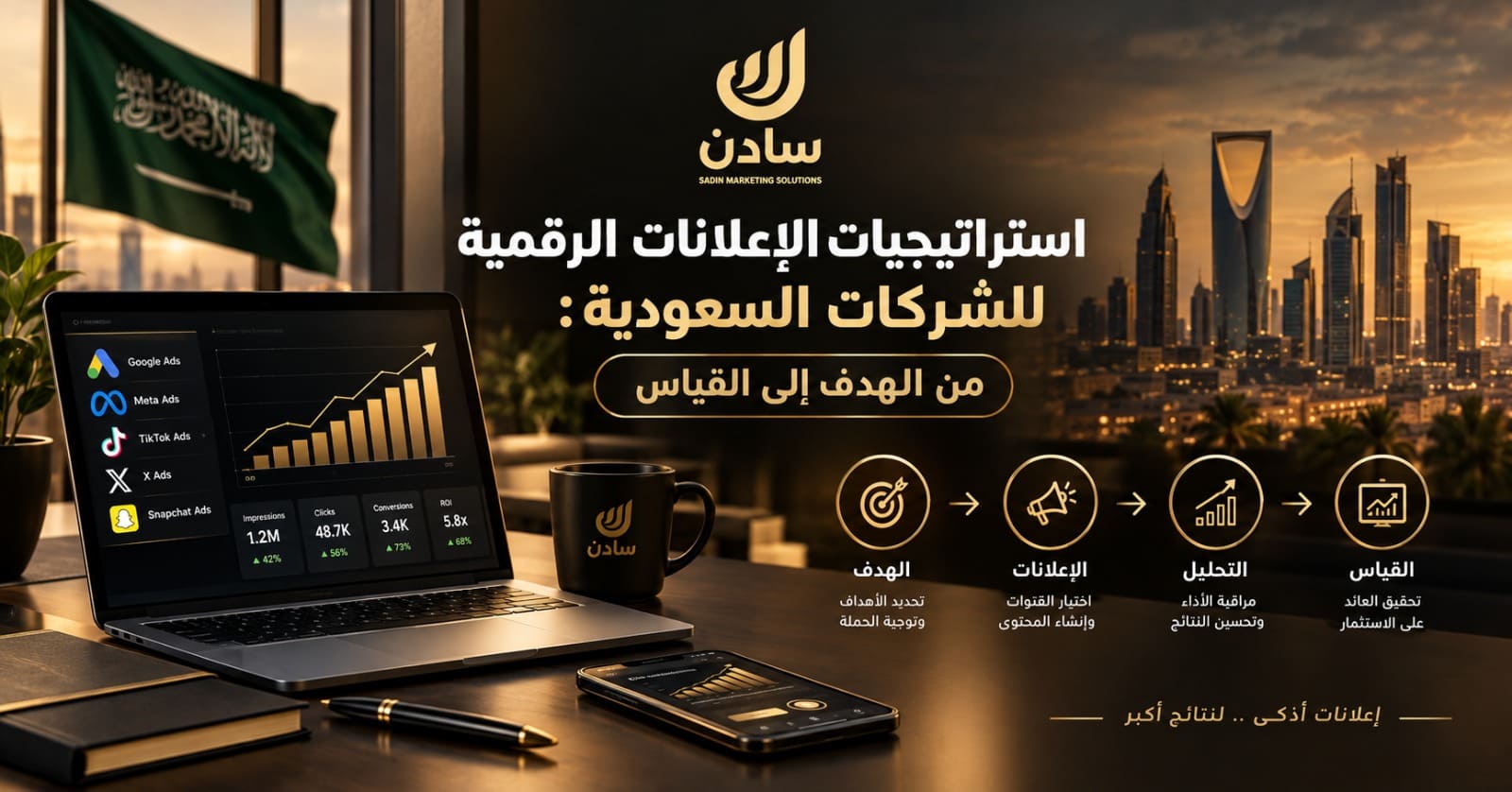
A digital advertising strategy for a Saudi company starts with a business objective and a clearly defined conversion. Connect the audience, offer and message to a page that can receive and measure the next step. Platform selection and increased spending follow that groundwork.
Start with one question: what should the customer do, and how will you know whether it led to a real sales opportunity? The answer shapes the campaign, creative and reporting.
Define the conversion you need
An ecommerce store may need completed purchases. A service business may need qualified quotation requests. A local business may need relevant bookings or calls. These outcomes differ from video views, site visits and clicks on a WhatsApp button.
Make the primary action clear in your measurement, while monitoring supporting steps to understand friction. A WhatsApp click signals interest; it does not prove that a message was sent or a sale completed. Agree with your sales team on how outcomes after an inquiry will be recorded.
Check operational readiness before launch
- Offer: what are you selling, to whom, and why should they choose it?
- Operations: is stock available, and can your team fulfill demand and respond?
- Destination: does the mobile page explain the price or quotation process and relevant terms?
- Measurement: have you tested an order or form submission and checked for duplication?
- Budget: are media, management and production costs separated?
If the offer is unclear or inquiries go unanswered, additional traffic may expose the problem. Explore Sadin's performance marketing service for the connection between planning, tracking and optimization.
Choose channels by their role in the journey
No single platform is best for every company. Use audience data, buying behavior and available demand to choose a starting point. The following is a decision framework, not a guaranteed formula.
| Need | Potential channel role | What to test |
|---|---|---|
| Customers searching for a specific service | Search ads to capture relevant demand | Queries, service areas and inquiry quality |
| A product that needs visual explanation | Social creative showing the product in use | Message angles and progression to the product |
| A previous interested visitor | Retargeting where data and settings allow | Objections, audience recency and frequency |
| A service with a longer sales cycle | Explanatory content followed by a suitable contact action | Lead quality, follow-up, proposals and sales |
Start with channels you can operate and measure well. Spreading a small budget across many platforms can make each test harder to interpret. For online stores, also read our ecommerce sales improvement guide.
Test messaging before expanding spend
Choose a clear hypothesis for each test. Does the customer need a use-case explanation, a comparison or an answer to a delivery concern? Make the visual, copy and call to action support the same idea, with evidence for every offer or feature mentioned.
Change a major element you can interpret, such as the message angle or destination page, and record the objective and test dates. A first click or order is not enough to establish a pattern. Data volume, the sales cycle and conversion reporting delays affect interpretation. Content creation can turn questions and objections into assets you can test.
Make the landing page fulfill the ad's promise
Send visitors to the closest relevant destination. A service ad needs an explanation of that service; a product ad needs the available product with matching information. Explain the benefit, details, genuine evidence and next step. Request only the form fields needed to qualify the inquiry.
Test the mobile journey yourself: read the copy, follow the link, submit the form and confirm that the team receives the request. Explore web development and landing page support if the destination needs improvement.
Measure quality and return without confusing them with profit
Review spend, primary conversions and cost per conversion, then what happens afterward. Service companies should connect inquiries to qualified opportunities, proposals and sales. Stores should compare recorded orders and value with cancellations and returns in their commerce data.
When conversion value represents revenue, ROAS is attributed revenue divided by advertising spend. Illustrative calculation: SAR 20,000 in attributed revenue divided by SAR 5,000 in spend equals 4x. This is not profit: it does not deduct product costs, operations, returns or service fees. It is not a Sadin campaign result.
Platform, analytics and store totals can differ because of conversion definitions, attribution and reporting periods. Explore analytics and performance management to review measurement before increasing spend. Google Ads guidance on conversion values explains why the value assigned to a conversion matters.
Frequently asked questions
Which platform should a Saudi business start with?
Use your audience, objective and demand data to choose a channel with a clear role. Popularity or another company's experience is not enough to establish suitability.
Are WhatsApp messages enough to judge a campaign?
Review whether inquiries match the service, how the team follows up, and how many become qualified opportunities and sales.
When should I increase the budget?
After checking measurement, results against your objective and operational capacity. Review incremental changes rather than assuming efficiency will remain constant.
Can advertising guarantee sales?
No general guarantee applies. Results depend on the offer, audience, competition, destination and follow-up. Agree on targets and a transparent testing and review process.
Discuss an advertising plan with Sadin
Explore Sadin's services and share your business type, campaign objective and proposed budget through our contact page. You can also contact us on WhatsApp or email info@sadinagency.com to discuss creative, advertising and measurement.